
|
Common problems with turf
To make it easier to diagnose
some common problems you may have with your lawns and playing surfaces, we have
composed a list, which may be handy to identify which of our services you may
need. It may well be you have a combination of these problems. In which case
please ask us to come and assess you needs
Poor grass growth
A variety of situations can cause poor grass growth. Football and rugby players,
children, or even dogs and other animals can have a major impact on your grass.
Grass puts energy into rooting during winter, so preparation and careful feeding
is critical for a hard wearing surface throughout the summer.
Typical
solutions: due to the
complexity, each case is assessed individually.
Yellow grass (anaemic)
Common causes of a yellow lawn is: not
enough nutrients, water logging and even your dog in certain patches. Other
problems might include fungus or bugs, which take nutrients out of the grass.
Typical solutions: aeration,
drainage, fertilisation.
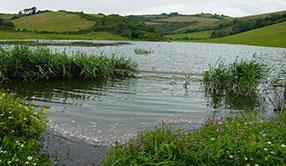
Water logging
Puddles and rivers forming on your surfaces every time it rains is most commonly
due to poor drainage. The cause of water logging is the soil structure beneath
the grass simply not allowing the water to drain through to the water table.
This is probably due to poor soil structure or compaction.
Typical solutions: install drainage
system - main and lateral drains plus gravel banding, verti-draining.
Moss
Moss is a thread-like plant, (Musci), common in sports turf that has been
thinned by excessively close mowing heights, improper fertilisation, poor
drainage or excessive thatch accumulation.
Typical solutions: scarification,
aeration, overseeding, pH adjustment to reduce the thatch layer, raise mowing
heights.
Compaction
Can be caused by:
- Poorly constructed surface
- Constant use of machinery
- Use of machinery at the wrong time
- Golfers/sportsmen continually playing on a surface
Compaction leads to water logging, poor grass growth,
is more susceptible to disease and weed infestation and surfaces that take
longer to repair and recover.
Typical solutions:
verti-draining, hollow coring.
draining, gravel banding if waterlogged.
Weeds
On fine turf weeds can flourish under extreme mowing practices. Weeds (mainly
broadleaf) in any turf will flourish if conditions are favourable and will
smother surrounding grass, which is detrimental to its growth.
Typical solutions:
Cultural: raise mowing heights, hand pick.
Chemical: selective herbicide spraying (environmentally friendly).
Grass
quality/quantity
Letting grass get too long in certain areas and then cutting it back is
detrimental to the plant's health. More frequent cutting at reasonable heights
will encourage both better rooting and tillering of the grass plant.
Typical solutions: frequent cutting and/or use of
growth regulators.
Grass species -
development and/or improvement
Different sports turf surfaces require grass characteristics that are
individually suited. Inevitably, after a period of time, most surfaces will
revert back to Poa Annua (Annual Meadow Grass). Whether it's Rye grass football
pitches or Bent/Fescue grass golf greens, these should be assessed individually.
Typical solutions: all these need to be assesed
individually.
Uneven surfaces
Shifting soil under new grass if not properly prepared can lead to an uneven
surface resulting in high and low areas. Another cause is simply that the
surface is worn more in one particular area: for example goal areas, footpaths,
and tee areas on golf courses
Typical solutions:
low areas - top dress, sand.
high areas - hollow core, scarify.
Disease
Disease in turf is the main cause of poor playing conditions on golf
courses,
especially in winter months. Any disease left too long will result in major turf
damage that may not improve until the following Spring/Summer when grass growth
permits recovery.
Typical solutions:
cultural - improve surface drainage via aeration, verti-draining, gravel
banding.
chemical - Preventative and/or curative control using fungicides
(environmentally friendly).
|